
Cyberpunk and Corpofacism
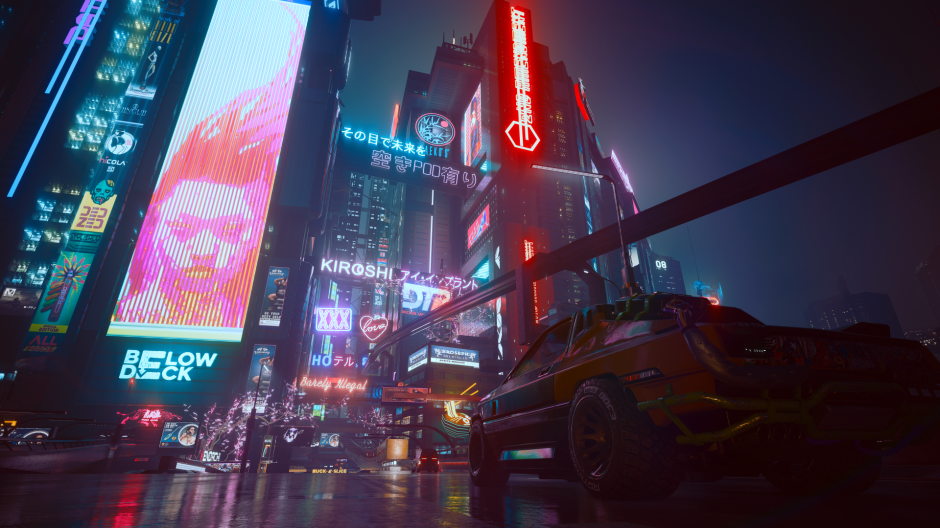
“Corpo-fascism” is a term I first encountered while playing Cyberpunk 2077 in 2024. At the time, I had just left my job and immersed myself in the game as a way to escape the monotony of everyday life. Set in the dystopian, neon-saturated sprawl of Night City, Cyberpunk 2077 presents a world governed not by states, but by megacorporations where cybernetic augmentation, data commodification, and violent power struggles define the social order.
Initially, I considered writing about the game in the same way I had written about others, Dragon Age, Baldur’s Gate 3, and Mass Effect, by exploring its cultural artefacts, environments, and narrative landscape. Night City itself is mesmerising: dense, vibrant, and deeply unsettling. Yet, unlike those previous worlds, something about it felt too close to reality. Its dystopia was not distant or fantastical, it was recognisable. That discomfort led me to abandon the idea and return to my academic work in archaeology.
Recently, however, I found myself drawn back to the game. Developments in the real world particularly the rapid rise of AI and data infrastructure have made Cyberpunk 2077 feel less like speculative fiction and more like a lens through which to view our future. Statements from OpenAI’s Sam Altman, for instance, suggest a model in which artificial intelligence becomes a utility akin to electricity or water. Rather than fixed subscriptions, users would “buy intelligence on a meter,” paying proportionally for the computational power they consume. This vision echoes the economic structures of Night City, where every basic human necessity is monetised: clean air, potable water, medical services, housing, and even personal safety.
Archaeology and the future
What is particularly striking is how Cyberpunk 2077 reframes the idea of “artefacts.” In traditional archaeology, artefacts are physical remnants, tools, pottery, architecture, through which we reconstruct past human lives. In Cyberpunk, however, the primary artefact is data. As the player-character V, you encounter “data shards”: fragments of recorded lives, conversations, and memories scattered throughout the environment. These digital traces reveal stories of individuals long gone, preserved not in material culture but in information. It raises an intriguing possibility might the archaeology of the future involve excavating digital landscapes rather than physical ones? Instead of digging into the earth, will we sift through data archives to understand human history?
The Rise of AI in the Modern Age
This convergence between fiction and reality becomes even more apparent when considering current technological and political trends. The expansion of AI infrastructure, such as large-scale data centres, has already begun to strain environmental resources. These facilities require enormous amounts of water for cooling, placing pressure on local supply systems and raising concerns about sustainability and access. The parallels to Night City’s desolate outskirts, wastelands shaped by corporate greed, ecological collapse, and conflict are difficult to ignore.
Similarly, the growing influence of private corporations over public systems reflects the logic of corpo-fascism. In the UK, for example, Palantir was awarded a £330 million contract to develop the NHS Federated Data Platform. While intended to improve efficiency in patient care, the project has sparked controversy over data privacy and the centralisation of sensitive information. Such developments highlight a broader shift: corporations are increasingly embedded within the infrastructures that sustain everyday life, blurring the line between public service and private control.
At the same time, prominent figures within the tech industry frequently warn of the existential risks posed by AI. These warnings framed in terms of potential human extinction or societal collapse often function less as cautionary tales and more as inevitabilities. There is a sense that these futures are not being avoided, but actively built.
The concentration of wealth and power further reinforces this trajectory. Over the past few decades, a small group of tech entrepreneurs and investors has amassed unprecedented influence often surpassing that of nation-states. In Cyberpunk 2077, megacorporations operate as sovereign entities: they write laws, control resources, and maintain private militaries. While the real world has not reached this extreme, the underlying dynamics are increasingly familiar, monopolistic practices, political lobbying, and the shaping of public discourse through media ownership.
The Personal Experience
What makes all of this especially unsettling is how rapidly formerly speculative technologies are becoming reality. Devices such as smart glasses, wearable augmentation, and experimental biohacking technologies are moving from fiction into consumer markets and medical research. Concepts once confined to dystopian narratives, cybernetic implants, neural interfaces, and data-driven identities are now actively being developed.
For me, returning to Cyberpunk 2077 in 2026 has been a profoundly different experience. The game no longer feels like escapism; it feels like reflection. Night City is no longer just a warning – it is beginning to look like a projection of where we are heading.
The question, then, is not whether we recognise the parallels, but whether we are willing to act on them. Can we still treat cyberpunk as a cautionary genre, or has it already become a blueprint? As the boundaries between fiction and reality continue to blur, we must ask ourselves how far we are willing to go before dystopia ceases to be speculative, and becomes lived experience.
*This article is written in the first person to create a more personal tone and intentionally omits academic citation.


I love this article thanks. As a fellow Cyberpunk 2077 player and fan I was inspired to write a book about the philosophy, ideology and implementation of corpofascism in this US administration. I give credit to the games and creators for the inspiration as well. https://corpofascism.com
LikeLiked by 1 person
Thank you so much Christopher for your feedback. While when I was playing it before it felt fantastical, now playing it feels more like a prophecy! Scary times.
LikeLike