Archaeology of Video games

For many, video games offer a distraction from the harsh cry of reality. They grant us a chance to delve into a world unlike our own. I loved being able to shut off the demands of homework when I got back from school. One of my favorite games was Final Fantasy VII, the steampunk world that Square Soft invented was so far from my own mundane existence it was very easy to switch off and immerse myself into its story. But, my favorite games were the ones which took place in a medieval fantasy world, they had just the right blend of anotherness and familiarity to make me feel content. I loved running around derelict towns, and fantastical ruins that it awoke a part of me that I never thought about before – a love of history and archaeology.

I can name a few video games which use archaeology as it main premise, there is of course Tomb Raider, and her male equivalent Nathan Drake’s Uncharted.  These games mashed with the supernatural make archaeology a world not left to the dead. Although the realities of archaeology are hardly ever shown, it allows for the mystery to draw you in. For archaeology to truly be effective in video games, it’s not the truth or accurate depictions of history that need to be implemented. It’s the aesthetic quality of the archaeology, seeing ruins and the degradation of civilization is just as awe-inspiring as it is terrifying.

tresspaser1
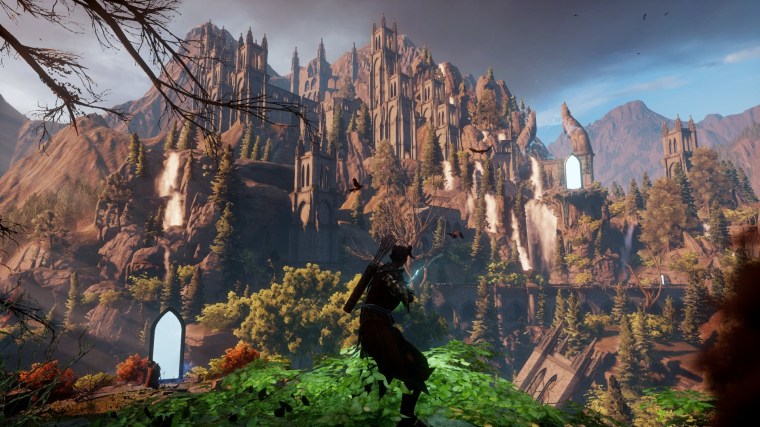
An ancient elven temple in the Dragon Age: Inquisition’s DLC Trespasser  ©  Bioware

One of my favorite visuals in video games comes from the fantasy series Dragon Age, in the DLC Trespasser, your character travels to a number of abandoned and ruined temples to uncover a plot to take over southern Thedas during a period of political uncertainty. The temples and structures are ancient elven, although they could be picked right from the North York Moors or the Scottish Highlands. 

fountains-abbey
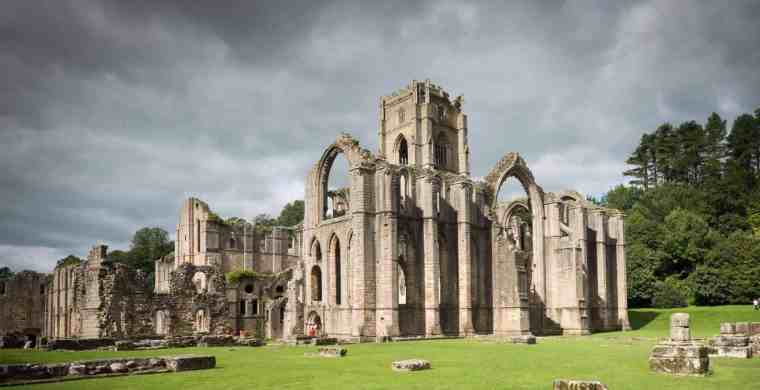
Fountains Abbey in North Yorkshire a “real” ancient elven temple.

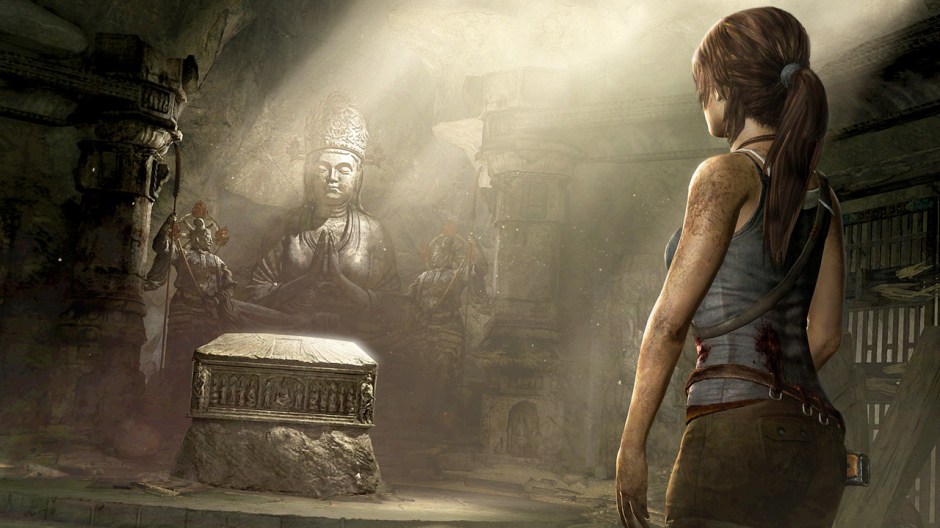
The aesthetics for ancient elven ruins weren’t plucked from the artist’s imagination although there is definitely a degree of creative licensing. These ruins are based mostly off medieval monasteries, most of which were destroyed during Henry VIII’s reformation.  Ruins tend to inspire a distant world long gone, one that sparks our imagination. In 2013’s Tomb Raider Lara voyages to the land of Yamatai, a forgotten feudal kingdom off the south coast of Japan, the island is full of ruins, most which are remarkably still intact. Although running around the island killing cultists had some fun, I was taken back by the beauty of the Kofun-period ruins. Just like the elven ruins of Dragon Age, they aren’t picked from an artist’s imagination.

R45qVEh
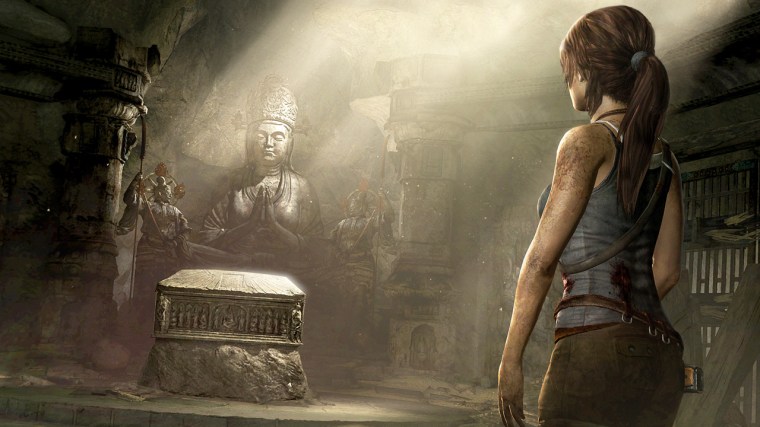
The reboot of Tomb Raider in 2013, took place in Yamatai, an insland full of ruins  ©  Crystal Dynamics

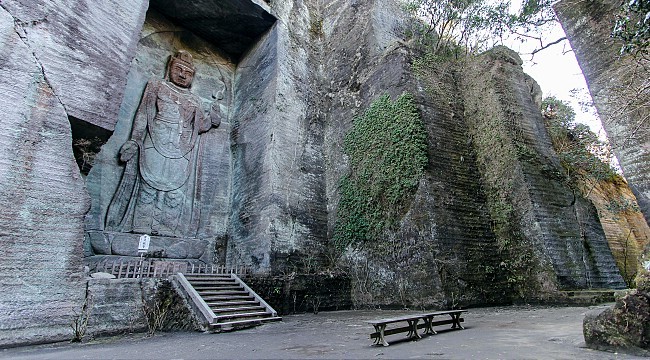
When I lived in Japan, I visited a place called Nokogiriyama home to a sprawling Nihon-ji temple complex. There are a number of reliefs carved into the side of the mountain which definitely are reminisce of Yamatai’s Queen Himiko’s statues. Game environments like these allow us to explore the past from more than just a player’s perspective. Interaction is a key to gaming, a medium that has allowed us to explore ancient environs. When it’s done successfully, a la Tomb Raider and Dragon Age, it can inspire gamers to seek the real truths, or spark their own creative imaginations.

6433_04.jpg
Nokogiriyama definitely had some real life Yamatai vibes. It is home to one of the biggest buddhas in Asia.

There are the plenty of other examples of the use of archaeological ruins and artefacts, but these two are my favorites. There is something very much ingrained into our psyche about archaeology and the mystery of what our ancestors left behind. When we interact with these environments in game it allows us to think of its functionality, its beauty and its past. In Trespasser when we go further and further into the evanuris to discover the truth of the plot, we discover a past that in fact is very much like our present. A world full of conspiracy, intrigue, betrayal but yet one full of beauty and humanity.

My love/hate relationship with UNESCO

I’d long decided that while in someways I hated subjecting archaeology to the realm of needless hierarchy, UNESCO or The United Nations Educational, Scientific and Cultural Organization was a necessary evil. The list of world heritage sites now comprises of more than 1,000 sites across the world, and the list keeps growing with economically more developed countries obtaining relatively more listings.

When I worked at a UNESCO world heritage site, I believed like many that UNESCO was a privilege bestowed on some of the most important and well-preserved monuments in our history.  But, I soon became jaded when I saw the endless tour buses deposit overeager tourists on our doorstep early every morning.  There was a plague of invasive tourism that UNESCO bought along with the prestige. Naivety led me to assume that these initiatives unite people in a common effort to protect shared cultural heritage. While that may work in developed countries, the influx of tourists in countries that lacks the infrastructure to support them contributes to the deterioration of many historical (and natural) monuments.

This is what makes UNESCO status divisive; like most things there is a negative side to every positive. While the UNESCO may damage archaeological monuments by promoting tourism, they have spared countless of heritage resources from the bulldozer. We should care about every world heritage asset not only only our own.  There is more to culture and our heritage than DNA, we construct our identities from stories, objects and buildings that conjure up our ancestors’ past: their glories, tragedies, or simply their day-to-day lives. So when Penny Mordaunt suggested pulling out from UNESCO due to budgetary concerns, it felt like a betrayal not only to our national past, but the world’s collective identity as people.

Currently UNESCO has no clear guidelines or effective methods to control the commercialisation of world heritage sites, and its talk on sustainability is more a verbal exercise than enforceable. So unsurprisingly when the Trump administration announced its withdrawal from UNESCO, many had cited the reasoning was that it provided no real protection for archaeological and historic treasures.

Of course the reason behind US’s withdrawal from UNESCO was to convey a political message.  In October 2011, UNESCO admitted the Palestinian territories to the organization as an independent member-state called Palestine. This triggered a US law which cut off American funding for any organisation that recognised an independent Palestine.

After studying archaeology for years, I’ve learnt that you can never separate politics and heritage, because ultimately heritage relates to people’s identity. Despite what World Jewish Congress (WJC) President Ronald S. Lauder  wants you to believe, “In recent years, despite the best efforts of outgoing Director General Irina Bokova, UNESCO has strayed from its mission to preserve history and has allowed itself to become politicised, demonstrating a continuing and disturbing bias against Israel.”

Take a look at other countries such as Egypt, where during a night of riots young activists formed a human chain around the National Museum that borders the square, helping security guards protect the treasures within. In places, where competing political narratives force the public to try and keep hold of their heritage. But it’s crucial to remember that largest part of UNESCO’s budget is spent on education initiatives in developing countries. Leaving UNESCO is not necessarily going to impact the heritage of the UK, but it would definitely convey a message of how disconnected we are with the  shared heritage of people around the globe. Political or not.


Archaeology as my identity

Despite years of studying, months in a muddy field, and endless days counting fragments of bones in a lab, I was still not a professional archaeologist. And as I mingled with new acquaintances or bumped into old school friends I constantly referred to myself as an archaeologist. I felt like I was telling some insidious lie, and have perpetuated it throughout the last two years. I had tried and tried like most graduates to get a job within the heritage industry that paid more than just above minimum wage. If I complained,  I kept hearing those words that archaeologists hate: “you do it because you love it” as if love alone could pay the rising interest on my credit card bills. But then I realised; that archaeology was more than just a way of paying the bills it was how I came to view the world; it had become my religion.

Archaeology goes beyond interpreting the material culture of the past, there is something about studying archaeology that changes your way of thinking in current society. You start to assess everything around you as though you were seeing it from the future, the questions of what, how and most importantly why become everyday occurrences. The need to constantly assess human behaviour becomes part of everyday life. It becomes just another cognitive function.

When I worked as an office worker, I constantly referred to myself as an archaeologist. This may be as some have pointed out as a form of self-validation, but to me it was true. I was never going to be the world’s best admin assistant, I was going to discover something no one had ever seen before, because archaeology was and always has been my end goal. Like those “writers” starting their first novel at a cafe, exchanging ideas with fellow writers. It’s the same premise, when you see another archaeologist drool over a piece of flint, or another jump for joy over a worked deer antler – the only bone that has come out of a tonne of soil – you start to understand what archaeology means, not just to our understanding of the past but to the people who do it.

In a modern world so fast and self-involved, I think we all feel a little disconnected from the past. My way of thinking has been shaped by my experience on the field, by my life counting bones, by the conversation post-lecture. Archaeology becomes more than just what we interpret about history but how it’s directly relevant to us.