Playing with prehistory

Lara Croft made the discipline popular when she stole her first artefact in the puzzle solving game Tomb Raider in 1993, and it seems archaeology retains that pulling power to attract players. After Tomb Raider sprung to the public’s imaginations, other similar characters such as Nathan Drake in Uncharted and Aliya Elasra in Heaven’s Vault have proved equally as popular. Since the release of Tomb Raider, video games have come along way, no more are the awkward blocks and 2D backdrops. In 2018 the environment of ancient Greece was designed for Assassin’s Creed Odyssey, it proved so authentic that a non-combat Discovery Tour version was released in 2019, allowing players to explore an almost historically accurate and thriving Acropolis all without the need to steal an artefact to unlock an achievement.

Video games have done such an astounding PR job for the profession with mainstream games such as Uncharted and Tomb Raider that they have inspired players to put down their controllers and pick up a trowel instead. Archaeology in reality, pales to the fantasy adventures of Lara Croft or Indiana Jones. But can we utilize the world building element of video games to engage with the public? The part of the human story that could benefit with such PR is the early prehistory (Palaeolithic- Neolithic or commonly known as the “stone age”), which almost never appears in the narrative of mainstream video games.

The designed worlds in video games are so intrinsic and real to the player that they make very engaging and effective public engagement tools. The fragmented nature of the archaeological record denies the full picture being seen, but video games, implementing the landscapes in historically accurate environments provide an insight to how this fragmented evidence could look in reality. Historical stimulation using the archaeological record may not appeal to the academic within us, seeming a bit gimmicky and altruistic, but they could unleash a new generation of archaeologists. However, prehistoric landscapes rely on preserved organic/palaeoenironmental remains in order for us to understand them, without the written record, archaeology is all we have, and how can soil and seeds recreate a landscape in the imagination of a child?

It has been done before and quite conveniently through the mechanics of Minecraft. The archaeology feature implements structures into the game called archaeology sites. This structure has blocks disguised as normal ones that have hidden treasures hidden inside of them. Users have also recreated real life archaeological prehistoric sites such as the Bryn Celli Ddu henge and burial tomb. Manchester Metropolitan University student Ben Edwards used his extra time at home to tackle an ambitious virtual building project. Rebuilding the monument in “Minecraft” lent Edwards “the freedom to reconstruct the landscape as it would have looked in the Neolithic [era],” he tells British Archaeological Jobs and Resources’ (BAJR) online news service, “right down to accurate hills, trees and rivers—something we had never done before.”

Archaeology can be an unobtainable world, the artefacts and structures buried in the dirt can struggle to spark the imagination of the public especially when those artefacts come from an era way before the adoption of farming and settled communities. Games focus on well-crafted environments that provide focal points of interest for players. This can easily make a game uniform and monotonous if not designed effectively.

Prehistory is not completely understood, the fragmentary nature of the archaeological record makes it hard for the record to be interpreted. However, that does not mean it cannot be implemented fully. The public may understand the context of a roman mosaic floor, but that understanding is usually understood within the context of standing archaeological sites such as Pompeii or Rome. The landscape and how our hunter gatherer/tribal ancestors interacted and understood it, is less understood even by the most experienced prehistorians.

An influx of interested academics in the esoteric subject of Archaeogaming means this is becoming a less taboo subject left in the margins of a few interested individuals. Although the literature is bogged down by the usual suspects of the previously mentioned Assassin’s Creed and Tomb Raider. The prehistory has had somewhat of a look in with Far Cry Primal and Dawn of Man releases. Dawn of Man is supposed to take place in the Palaeolithic period, an area of archaeological research in the UK which is scarce of substantial finds. The game is world building but primarily focuses on developing a settlement, while this game is engaging for prehistorians or keen hobbyists it fails to properly reconstruct a prehistoric landscape. For the purposes of public engagement it would be impractical.

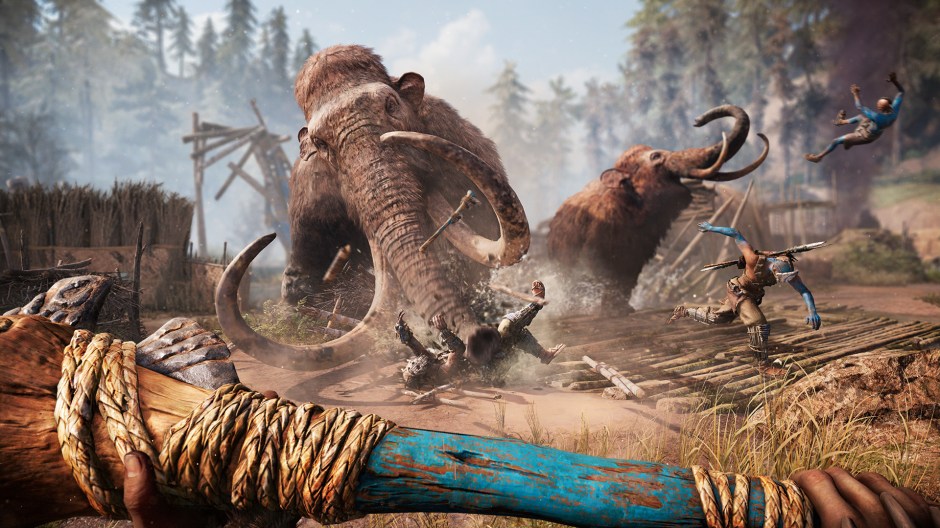
The mainstream third person games is the way forward for a truly immersive experience, Far Cry Primal was the closest we got to this. Set in Mesolithic Central Europe. It provided a number of tropes that unfortunately distract from the complex game environments that the developers have created. Tropes such as the presence of the sabre-toothed cats, which became extinct n Europe in 26,000 BC meaning that their presence in a Mesolithic Europe at around 10,000 BC means it’s highly unlikely that they would be roaming around the landscape as they are depicted in the game. While there is nothing wrong with providing a landscape that creates the feeling of a Stone Age landscape. The perpetuation of these tropes in the media make it hard for those outside the archaeological sphere to truly appreciate how humans evolved and progressed. The Stone Age (Palaeolithic, Mesolithic and Neolithic) periods do not appear in the mainstream media often, is it because archaeologists have failed to spark the imaginations of the general public? Or is the lack of data, and the apprehension to interpret such data a contribution to the greater public understanding of these highly misunderstood periods.

The issue with prehistory is that it expands such as a long period of time that it can be homogenised and be melded into something that does represent the different time periods. But built-in engagement doesn’t necessarily need to rely on archaeological/historical accuracy to become a useful tool in public meetings. However, it does need to have some resemblance of the truth I order to create honest discussion. Another game that although fantastical in almost every element had some truly inspiring landscapes is Hellblade: Senua’s Sacrifice. The game was developed by Ninja Theory and released in 2017, and focuses on mental illness and episodes of violent psychosis. It follows a Pict woman who has psychosis and goes to the underworld in order to save her dead lover’s soul. Although it is not set within prehistory, it is set in a period of history frequently referred to as the Dark Ages due to the scarcity of records. There seems to be something rather authentic about the artefacts assemblages scattered throughout the game. We learn about the ideological concepts through the iconography, statues and landscapes. This faithful interpretation likely owed to Dr Elizabeth Rowe of the University of Cambridge, an expert in Scandinavian History in the Department of Anglo-Saxon, Norse and Celtic, who helped to develop the narrative of the game.

Contrary to what we know about the Early Medieval period like that represented in Hellblade, the nuance of trade, communication, and ideology means that the prehistory can be daunting for videogame creators, hence when a prehistoric backdrop is utilized in popular games it tends to be highly conceptual or completely inaccurate with games set in the prehistoric Age committing the predictable mistake of placing our ancestors in a world full of dinosaurs (Raso, 2011). Aside from this vision of prehistory full of interpretive mistakes, however game mechanics become very useful when translating the precarious nature of stone age life. For example, as Raso states (2011, p.85) “the survival of the individual and his social group or band was closely related to the nutritional resources they could obtain, an omnipresent aspect in the monographs concerning the most classic prehistoric sites.”

This is characterised in Horizon Zero Dawn when hunting the robotic creatures that dwell in a dystopian landscape. Its Neo-prehistoric world allows the developers to hypothesize how humans would react to the environment full of pseudo mega-fauna. Due to the sci-if aspect of its premise Horizon Zero Dawn overcomes the limitations of a prehistoric setting. The landscapes become a place for the player to explore and evaluate in an archaeological context where the debris piles serve as an artifact assemblage to be analysed. The game takes place in a world with gatherer-hunter communities have since developed in the time after an apocalyptic event complete with their own ideology, politics, and trade. As Reinhard (2017) states “artefacts and landscapes post-modern and culturally relativistic interpretation.”

There is game that tries to recreate the dangers and of a prehistoric landscape. Released in 2019 for Microsoft Windows, PlayStation 4, and Xbox One, Ancestors: A Humankind Odyssey was developed by Montreal-based Panache Digital Games. A single-player, set 10 million years ago third-person adventure game set in a generic African landscape (consisting of ecosystems such as tropical rainforest, savanna, and coastline). The main goal of the game is survival, the player’s progress can easily be lost if the members of their clan die, players learn how to survive by a trial-and-error approach to the various social interactions, cross-species encounters, and tool use opportunities that are available in the game environment. A similar concept was created by Rubio Xavi for educational purposes. Ancestors: Stories of Atapuerca‘s game mechanics were based on the everyday activities of the hunter-gatherer lifestyle: hunt, make tools, gather resources, move camp etc (Rubio-Campillo 2020; p.53). The game also included small details which are often invisible in videogames such as the presence of children and the elderly.

There are many ways for this to become a reality but involves the archaeological community, the commercial and academic sectors working together to create something that is entertaining, immersive, realistic but also fun to play. The key is to create a connection to the player, and this doesn’t necessarily need to be done through the game mechanics, but through the narrative or characters. It doesn’t necessarily have to be accurate either as shown in Hellblade and Horizon Dawn Zero, but it does need to be represent the past in a way that feels authentic.

The human story started when our ancestors were hunter-gatherers, and this part of our narrative tends to be the pushed to the margins, maybe it reminds of a time when we were truly vulnerable, or the lack of written history makes its more of a dark age. Whatever the barriers, it is up to the academics and media to show how interesting and stimulating this period of human story can be.

  • Snyder, W.D., 2022. Have Video Games Evolved Enough to Teach Human Origins?: A Review of Ancestors: The Humankind Odyssey. Advances in Archaeological Practice10(1), pp.122-127.
  • Raso, D.G., 2016. Watching video games. Playing with Archaeology and Prehistory. AP: Online Journal in Public Archaeology1(2), pp.73-92.
  • Rubio-Campillo, X., 2020. Gameplay as Learning: The Use of Game Design to Explain Human Evolution. Communicating the Past, p.45.

Video games inspire us

“All men dream – but not equally. Those who dream by night, in the dusty recesses of their minds, wake in the day to find that it was vanity… But the dreamers of the day are dangerous men, for they may act their dream with open eyes, to make it possible. This I did.” From T. E. Lawrence’s Seven Pillars of Wisdom.

I get asked a lot, “how did you get into archaeology?” it’s not a question I like to answer. I find myself tugging on the ends of my sleeves, an awkward reflex I picked up during the tortuous years of high school. The truth is I always lie when I respond to this question. I lie quite unabashedly about getting interested in archaeology in my teens, but the truth is archaeology never really crossed my mind until my early twenties. I’d always loved history; castles and I took delight in Indiana Jones as a kid but that was the extent of my appreciation for the discipline. The reality is videogames got me interested in archaeology, and not just any video game, Dragon Age. I loved the series so much, but it wasn’t just the storyline or characters that sucked me into the world, it was the world itself: scattered ruins, ancient races, forgotten languages and mystery hidden behind every corner.

The environs of Dragon Age got me thinking of historic landscapes in my country, England. I started visiting ruins of abbeys some which could be picked straight out of Ferelden. I loved the symbolism found in Celtic crosses and was drawn to the preserved landscapes of the prehistoric. After a year of making the most of my English Heritage membership I knew that I wanted to pursue something that made me fulfilled, much like how video games had made me feel. I applied for a degree that year, and continued playing video games with archaeology as a focal point, Tomb Raider and Uncharted. My archaeology origin story was one I didn’t like to share with others at university who usually had the typical story of joining their father’s excavation at Durham or found their first piece of worked flint at the age of 8.

Video games have always influenced my life and for the most parts in truly positive ways. It was my love for video games that led me to Japan when I was 20, got me into sewing as I recreated outfits of my favourite characters. It’s how I met my best friend, my first boyfriend, it’s provided me with a number of positive female role models throughout my adolescence and early twenties. It provided escapism when life just got too tough, allowing me to switch off the static around me. The role video games has had on my life and career has been unmeasurable, I owe Square Enix, Bioware and Core Design my sanity and happiness. When parents complain about their kids on that damn Xbox all the time, don’t automatically think they are wasting their time. It’s likely they are being inspired for the rest of their lives, to take risks they probably wouldn’t  take outside of the safety from their own living room.  To think outside the box, to study astrophysics to be like Commander Shepherd, to be fearless like Ellie or to create their own video games as a writer, artist or composer. That’s because video games inspire us.

Queen Himiko of Japan – The Archaeology Behind Tomb Raider (2013 & 2018)

“Myths are usually based on some version of the truth”

– Lara Croft, Tomb Raider

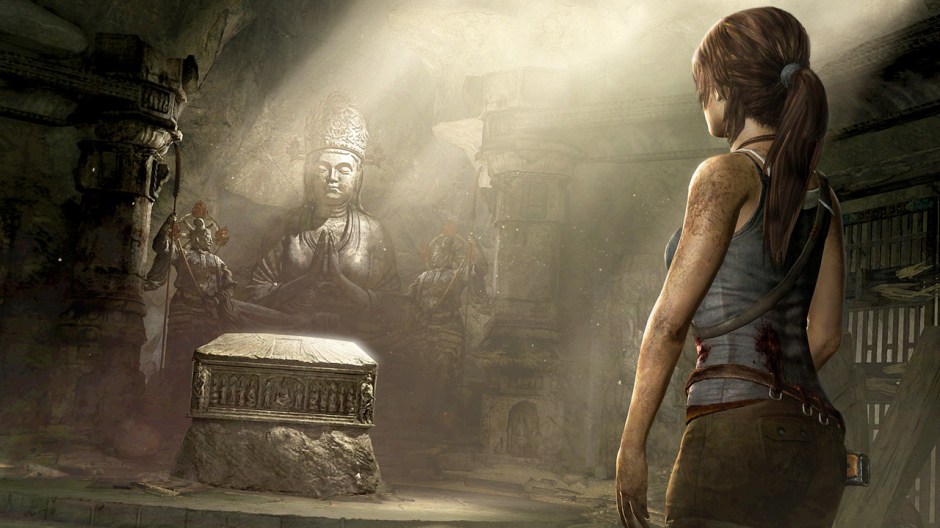
There was something to admire about Crystal Dynamics’s 2013 video game Tomb Raider, Lara Croft, the main protagonist’s of the franchise is a keen archaeologist and like many wide-eyed archaeology graduates wants to make a name for herself. In this rendition, her interest in exploration focuses much more on the archaeology she hopes to discover than the treasure she uncovers during her time as PlayStation’s pinup girl of the 90s. In the 2013 game, recent archaeology graduate Lara Croft travels to a lost island off the coast of Japan in search of the lost kingdom Yamatai. Unfortunately for Lara and her comrades, the island is crawling with cultists known as the Solarii, and soon she forced into a battle of survival as she tries to escape the cult and the a supernatural presence that is chasing her.

Like many gamers, I loved this version of Lara (before the daddy issues came along, damn you Rise), and as an archaeologist interested in East Asian prehistory, this setting sparked intellectual joy (thanks Marie Kondo) unlike the previous games, which stuck to the fail safe of pyramids and King Arthur. There aren’t many faults with this game, and like Lara I too became captivated by the legendary figure of the Sun Queen, Himiko.

In the game Queen Himiko (卑弥呼) serves as the antagonist to Lara Croft, creating a supernatural entity Lara not only has to fight but also has to use her wits and intelligence to keep one step ahead. A formidable opponent for Lara, the spirit of the ancient Sun Queen is transferred from body to body through ritual female sacrifice.  Himiko is essentially a plot device that allows Lara to realise her full potential as an archaeologist and tomb raider as she tries to solve the mystery of the island and its inhabitants.

Queen Himiko as she appears in the 2013 video game Tomb Raider

A quick history

Queen Himiko was the shamaness ruler of the Yamatai kingdom, an area of Japan considered to be part of the country in Wa (Japan) during the late Yayoi period. Himiko is not mentioned the first history books Nihon Shoki (720 AD) and Kojiki (712 AD). She is however mentioned in Chinese history books, specifically the he c. 297 Records of the Three Kingdoms (Sanguo Zhi 三國志). These Chinese sources portrayed Himiko as a mighty sorceress and there are several such characters in Japanese history who could fulfill that role. Scholars in the 17th century proposed Empress Jingu. She became the defacto ruler of Japan in 201 AD ruling for the next 68 years until her death at the age of 100. However, Chinese sources claim when Himiko died there was a prolonged period of civil war which ended in the Yamatai making another woman their Shaman-Queen, a woman called Iyo (壹與). Jingu was succeeded by her (possibly illegitimate) son, Ojin.

However, the biggest mystery that still lingers till this day is where was the kingdom of Yamatai? In the video game Yamatai is depicted as having multi-period occupation island, but archaeologists believe the real Yamatai to have existed in some form in Kinki, the Yamato region of Japan.

The Yamatai Controversy

Andonyama kofun – burial mound of Emperor Sujin

Known in academia as “The Yamatai Controversy” , in the last century archaeologists and historians had two main contenders for the location of Yamatai. Kinki in the Yamato region of Japan and Northern Kyushu. However, an account by a Korean itinerary to Yamatai in Wei-shu disputes the theory that the kingdom was that far south in Kyushu.

It is likely that the kingdom was close to the old capital of Nara within mainland Japan, a potential archaeological site has been linked to Yamatai in Hashihaka. In 2009, excavations in Makimuku ancient ruins in Sakurai revealed the Hashihaka tomb, dating back to the late third century, and is said to be the location of the tomb of Himiko. The Makimuku ruins measure about 1.24 miles (2 kilometers) east to west and about 0.93 of a mile (1.5 km) from north to south. The ruins have ancient burial mounds, and a 306-yard (280-meter). In 2015, further investigations showed a burnt boar scapula found in the ruins of Makimuku, which may relate to the practice of burning animal bones to tell the future. The boar bone found at Makimuku measures 6.6 inches (16.7 cm) long by 2.64 inches (6.7 cm) wide. A further 117 frog bones have also been found at the site and there is a suggestion that they may have been used as an offering to the gods or in some other kind of religious rites.

Shaman Queen

In the video game Tomb Raider, Queen Himiko is said to have shamanistic powers and abilities, and there is some truth to this. Himiko is said to have practiced guidao, or Japanese kido, a type of Daoist folk religion. The Gishi no Wajinden (魏志倭人伝, ‘Records of Wei: An Account of the Wa’) described her as a having “occupied herself with magic and sorcery, bewitching the people”. She was seldom seen in public and was attended by “one thousand attendants, but only one man”. Like the video game, Himiko had many female attendants and a legion of skilled warriors who were sworn to serve and protect her known collectively as the Stormguard. They guarded her decaying body until Lara is forced to fight them to get to her tomb to save her best friend Sam from being another sacrifice.

 The archaeological record shows reveals that some of these myths might have some basis in the truth. Between 1955 and 1964, a series of archaeological discoveries including the excavation of a tomb near Kyoto with numerous bronze mirrors possibly dating from the 3rd century.  A mirror, known as Himiko’s mirror, was found in the Higashinomiya Tomb in Aichi, Japan. Researchers analyzed the “mirror”  and found it had a slight unevenness to its surface – so slight the naked eye cannot recognize it. The uneven surface creates patterns on the back as light reflects off of the front of the mirror, seeming to project a magical image.

Tomb Raider 2018

Queen Himiko as depicted in the 2018 movie Tomb Raider

Unlike the 2013 game, Tomb Raider the movie released in 2018 starring Alicia Vikander as Lara, takes Himiko in a completely different direction depicting the queen as the “Mother of Death”. The movie has a big twist, unlike the game Himiko isn’t mystical, (the real Queen Himiko probably couldn’t control storms or transfer her essence across bodies) but rather she was the carrier of a deadly disease. Furthermore, she wasn’t malicious; in fact, she exiled herself to Yamatai to prevent the spread of the sickness. There is no mention of her shamanic abilities or her role as a religious figure, which spurs the video game’s main antagonist Mathias, who’s been stranded on the island for 31 years, to worship her. Yet, like her real life counterpart she is still shrouded in mystery and intrigue.

The real Himiko’s legacy is a reminder of how historical women figures are often forgotten. She doesn’t feature prominently in the history of Japan, and recognition as a ruler didn’t come till the Edo period in the 1600s. It is likely that the Japanese adoption of Buddhism and Confucianism didn’t do much to elevate the status of women. Fortunately, she wasn’t permanently erased. Himiko represents the first notable ancestor of a strong tradition of female religious leaders and political leaders in Japan and serves as a representation of the unnamed women forgotten to history.

This Land is My Land and the homogenisation of Native America

There aren’t many things I get excited about apart from an exceptionally well made cup of tea and a chance to go on a holiday. So when it comes to gaming, it takes a special kind of game for me check on Steam if it’s on preorder. And let’s be honest if you follow me, these games mainly focus on archaeology or anything Bioware (#since2003). But, I was blown away with what I saw from This Land is My Land trailer.

The game is s an open-world set in late 19th century frontier, you play from the point of view of a Native American during a time when “America” was being overrun by white settlers. The game is being created by Ukrainian outfit Game-Labs, best known for the PC strategy Ultimate General series, set in the American Civil War.

The truth is I’ve always wanted to play an indigenous character who fought the colonizinng force of Western Europe. It was story rarely seen in Hollywood without a white male savior thrown in the mix (think Dances with Wolves, The Last of Mohicans, The Revenant etc). The video game industry is no better, there have been few games with native protagonists with the Indie game Never Alone,the only one springing to mind. While AAA games like Shadow of the Tomb Raider incorporate indigenous tribes, it still focuses on the privileged white hero saving the day. No hate, I love Lara Croft. And the issue becomes ever more glaring when you realise only 0.09% of video game characters are Native American. Whoa.

Speaking to Polygon, the game’s development lead Denis Khachatran, says the protagonist represents an amalgam of western tribes. “You represent them all,” he said. “The Chickasaw, Cherokee, Lakota, Cheyenne, Apaches, Navajo, Shawnee, Shoshone, Mohawk, Utes and all other tribes large and small. And this is where the problem lies, popular culture and movies perpetuate an homogenized Native America and ignore the incredible diversity of Native groups across North America.

The homogenizing cultures perpetuates issues of identity and stereotypes of Native people. Without consulting Native tribes and the general lack of contemporary representation of Native Americans in the media it’s no surprise Native Americans find it difficult to see themselves fitting in to contemporary American culture.

The homogenization of Native Americans effectively reduces them from proud people to salable curiosities. As Steven Heller states, “By the end of the 19th century, images of Native Americans had become so commonplace in American advertising that it was taken for granted, and criticism was minimal if at all.”

While in some ways its commendable for a European game studio to incorporate the Native Americans’ historical fight against European colonization, the issue still remains that popular media is the only exposure some people have to certain members of other groups. And when game developers decide to homogenize multiple cultural groups inaccurate or stereotypical representations are bound to be conveyed.

Video games like This Land is My Land have the opportunity to present Native Americans cultures to those not familiar with a group who often themselves feel invisible in the mass media. Consulting with Native American tribes also shows that we are moving away from borderline colonial discourse that has plagued mainstream media since the dawn of its creation. The issue isn’t only about under-representation, but the quality of representations on offer, not allowing people to see the unique, diverse, and contemporary people they actually are.

Lara Croft: the problematic archaeologist

She proved to the world that women can make exceptional protagonists. She embodies woman empowerment, wit and adversity, but Lara Croft also represents the colonial values of old school archaeology.  Like many archaeogamers, I’m a huge fan of Lara Croft, even Classic Lara, who stole artefacts and disseminated archaeological sites just because she felt like it. In the first Tomb Raider, she says it herself: “I’m sorry, I only play for sport.” But as the reboot series tried to transform Lara to less of a female avatar built for the male gaze to a relatable hero, she fell more victim to Western imperial privilege. Oh the irony.

This wasn’t an issue with her character in 2013’s Tomb Raider. When the game was released we were introduced to a very different, much younger and inexperienced Lara. She eventually becomes reminisce of the fierce warrior we all know and love. Her trials throughout the game proved that she could take care of herself no matter what was thrown at her while still taking a moment to awe at the ruins and artefacts she encountered. I loved 2013’s Lara Croft, she reflected the metaphorical journey of becoming an archaeologist that it was hard not to root for her.  In the game, Lara voyages to find the lost kingdom of Yamatai on an expedition (not to look for her lost father, thank you kindly Alicia Vikander) funded by her best friend Sam. The trip turns into a fight for survival as she finds herself stranded on a desert island with cultists and a supernatural force who refuses to let her leave. The story focused on her trying to break into the archaeological world with a huge discovery, and that’s the key difference to its successors.

Rise of the Tomb Raider shows us quickly that Lara has changed, she’s become more interested in hunting an organisation known as Trinity, (who she believes is behind the death of her father) than in archaeology. Before in 2013’s Tomb Raider, Lara was mesmerised (as much as she was afraid) of the island she was stranded on. But the narrative device of seeking revenge leaves her more in John Wick territory than Howard Carter’s trench. In Siberia, Lara joins the Remnant (descendants of the prophet Jacob) in order to defeat Trinity. Lara is less interested in discovery and the excitement of the archaeology she finds, and more the need to prove that her father was right (about Trinity and the supernatural). Rise of the Tomb Raider gives Lara less agency in her decisions, which only makes her less competent as an archaeologist and explorer.

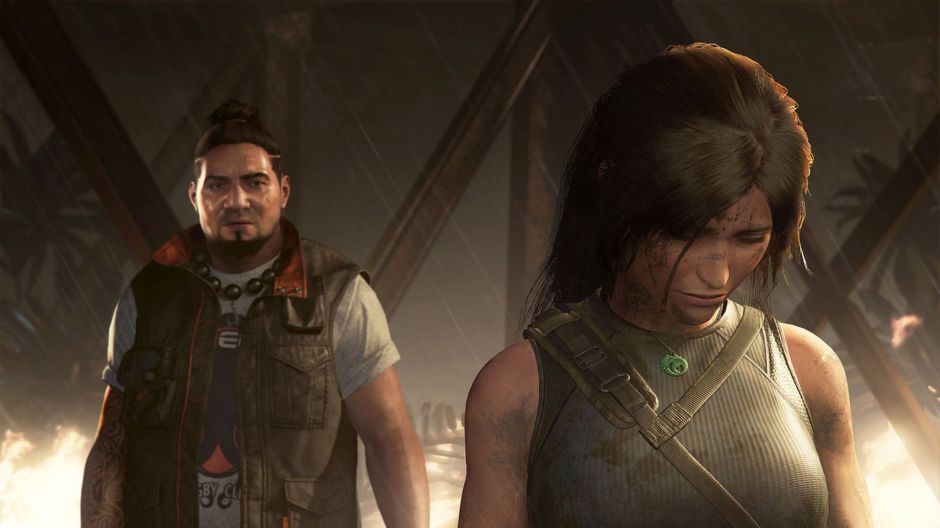
But her incompetence doesn’t equate to British imperialism, she might make bad decisions, but she’s not a looter or a thief. That however changes in 2018’s Shadow of the Tomb Raider, everything I had loved about Lara was shattered with her intro in Cozumel, Mexico. As Lara Croft “takes” a knife protected within a pyramid, she becomes part of the gang of white folk traipsing around the world, stealing treasures from other cultures.

Even the antagonist, the leader of Trinity and esteemed archaeology professor, Dr. Dominguéz underestimates Lara’s entitlement  saying “It never occurred to me that you would just take it.” Not only does she freely steal a clearly valuable piece of cultural heritage she also triggers a massive tsunami that kills almost all the inhabitants of Cozumel. The relatable Lara that Crystal Dynamics wanted us to so truly love in 2013’s Tomb Raider had disappeared. The consequences of her actions and her remorse are left out of the rest of the game. The empathetic Lara, who went to immeasurable lengths to save her friends in 2013, unintentionally drowns a whole town and she hardly manages a shrug. But it only gets better, Lara then “discovers” the ancient and still living city of Paititi, where she does simple tasks for the indigenous people, who seem incapable of doing any sort of action before Lara came swooping in. This is obviously a citadel purposely built  for Lara to steal plenty of Indigenous souvenirs along her way.

There aren’t many more ways for it to get worse in Shadow of the Tomb Raider, right? Wrong! The introduction of good old human sacrifice elevates the game to Apocalypto level of racism and inaccuracy. It’s true sacrifice was practiced by many different cultures of pre-columbian South America, but that’s true of almost every culture in the last millennia. Humans were killed because of contemporary ideological beliefs, be it religion, politics and/or conquest. The use of sacrifice in Shadow of the Tomb Raider reflects the savage Indian trope. In order to implement sacrifice into the main storyline, the developers needed to recontextualise parts of the practice separate from white colonialist ideas of good and evil. Later in the game, Lara replaces Unuratu (the leader of Paititi) as the hero of her own people.  Lara doesn’t just steal artefacts in this game, she steals people’s destiny. Unuratu can’t save her people, she needs Lara for that.

After Lara does indeed save the day, she returns to her manor in the British countryside with a butler bringing her a fresh pot of tea. In typical colonial fashion, she returns to her comfortable life and her crimes are left unpunished.

Why we need Indiana Jones

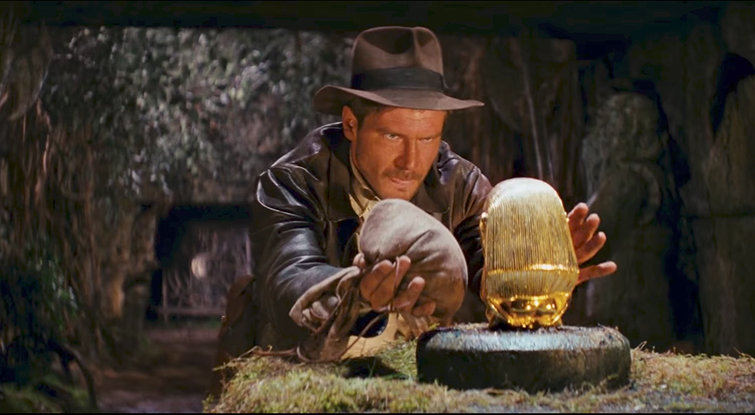
The media is often our strongest ally and often our greatest enemy. Drones of students decide to follow the footsteps of their heroes (Richard O’Connor, Lara Croft, Indiana Jones), allowing them to break the norm and enter a world quite unlike their own.  The media has painted archaeology as a profession of discovery, uncovering visually attractive finds, sites and civilisations. But often the journey to find our truths leaves many unanswered questions and because of this archaeology is often linked to mysticism and mystery. These mysteries are often supernatural in nature and it’s often up to the archaeologist to figure them out, think Relic Hunter, Bone Kickers, and of course Tomb Raider. It’s a victim of the Bond-effect creating a powerful brand for the the archaeology profession but posing no resemblance of reality. 

I suspect not many people watched Indiana Jones believing that archaeologists went around destroying archaeological sites and shooting sword wielding henchmen, but you’ll be mistaken if depictions like Indiana have little impact on the profession. Despite producing a sharply divided reaction among archaeologists, media representations of us are some of the most powerful. 

These stereotypes allow for more than just an appealing career, they form the public opinion on the profession. You can often find TV programming which focuses on the words like Ancient Lost Secrets Reveal the Hidden Mysteries of the Dead. There is a reason for this, if archaeological programming used words which reflected the profession it would be along the lines of Excavations Identify Farming Tools Reflecting Migration Patterns which of course sounds far less sexy.

However, these depictions of archaeology inspire real interest across the world. We want people to be motivated by the past, enough to support our work or even venture into the profession themselves. Even if these embellishments are far from the truth, they are the catalyst to get interest in the human past. And no matter what my colleagues might say, Lara Croft will always be my favourite archaeologist.

Archaeology of Video games

For many, video games offer a distraction from the harsh cry of reality. They grant us a chance to delve into a world unlike our own. I loved being able to shut off the demands of homework when I got back from school. One of my favorite games was Final Fantasy VII, the steampunk world that Square Soft invented was so far from my own mundane existence it was very easy to switch off and immerse myself into its story. But, my favorite games were the ones which took place in a medieval fantasy world, they had just the right blend of anotherness and familiarity to make me feel content. I loved running around derelict towns, and fantastical ruins that it awoke a part of me that I never thought about before – a love of history and archaeology.

I can name a few video games which use archaeology as it main premise, there is of course Tomb Raider, and her male equivalent Nathan Drake’s Uncharted.  These games mashed with the supernatural make archaeology a world not left to the dead. Although the realities of archaeology are hardly ever shown, it allows for the mystery to draw you in. For archaeology to truly be effective in video games, it’s not the truth or accurate depictions of history that need to be implemented. It’s the aesthetic quality of the archaeology, seeing ruins and the degradation of civilization is just as awe-inspiring as it is terrifying.

tresspaser1
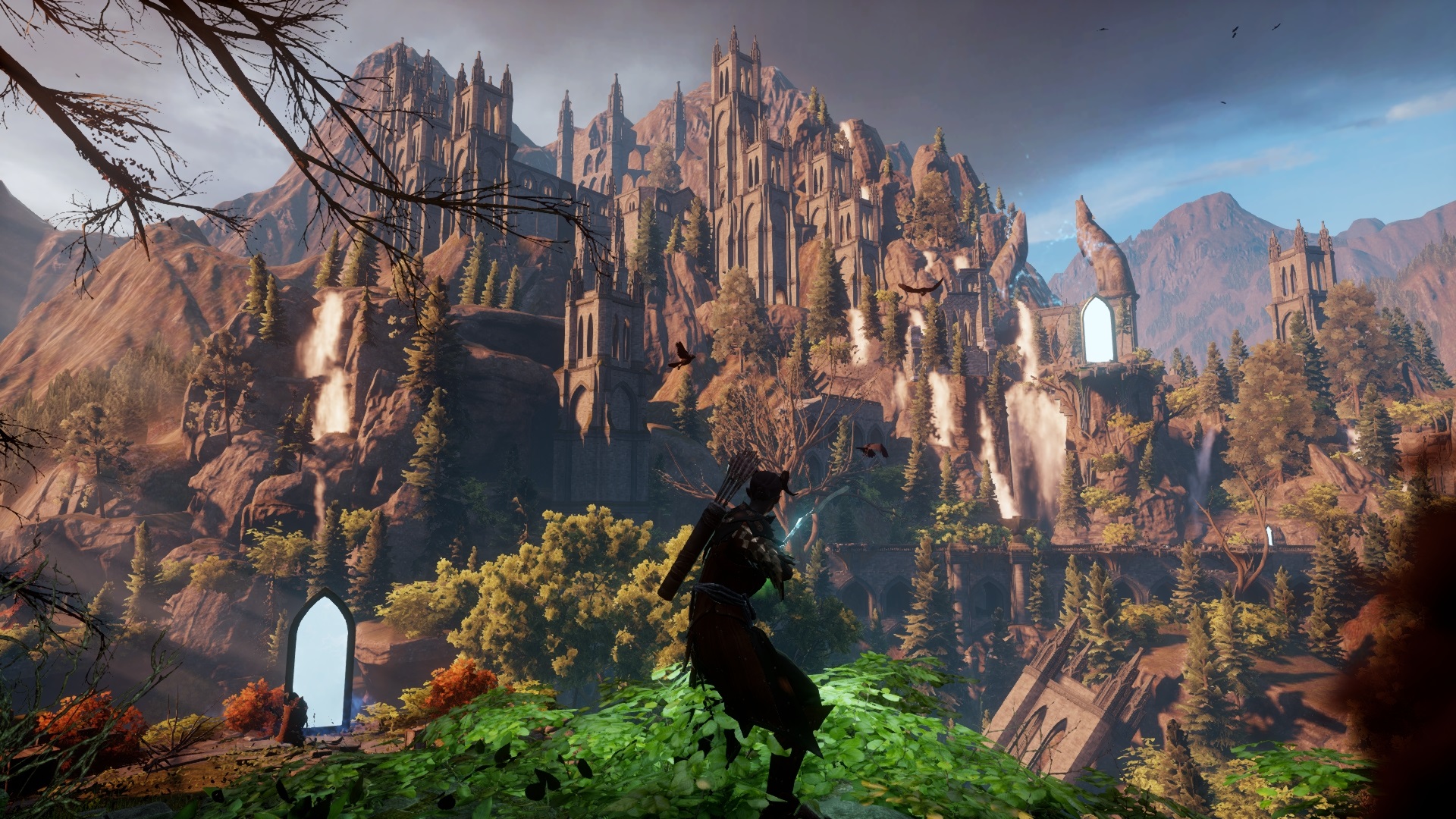
An ancient elven temple in the Dragon Age: Inquisition’s DLC Trespasser  ©  Bioware

One of my favorite visuals in video games comes from the fantasy series Dragon Age, in the DLC Trespasser, your character travels to a number of abandoned and ruined temples to uncover a plot to take over southern Thedas during a period of political uncertainty. The temples and structures are ancient elven, although they could be picked right from the North York Moors or the Scottish Highlands. 

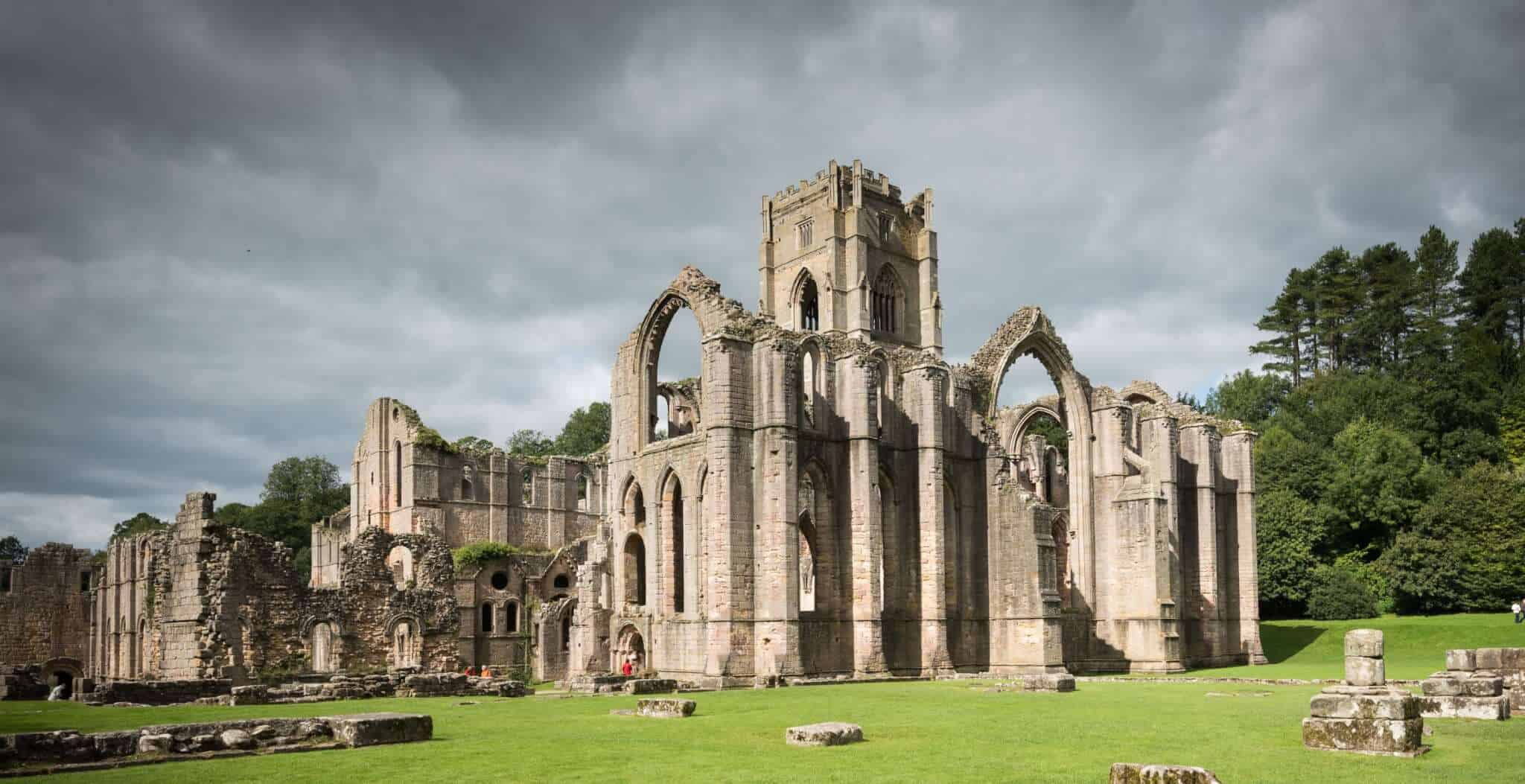
fountains-abbey
Fountains Abbey in North Yorkshire a “real” ancient elven temple.

The aesthetics for ancient elven ruins weren’t plucked from the artist’s imagination although there is definitely a degree of creative licensing. These ruins are based mostly off medieval monasteries, most of which were destroyed during Henry VIII’s reformation.  Ruins tend to inspire a distant world long gone, one that sparks our imagination. In 2013’s Tomb Raider Lara voyages to the land of Yamatai, a forgotten feudal kingdom off the south coast of Japan, the island is full of ruins, most which are remarkably still intact. Although running around the island killing cultists had some fun, I was taken back by the beauty of the Kofun-period ruins. Just like the elven ruins of Dragon Age, they aren’t picked from an artist’s imagination.

R45qVEh
The reboot of Tomb Raider in 2013, took place in Yamatai, an insland full of ruins  ©  Crystal Dynamics

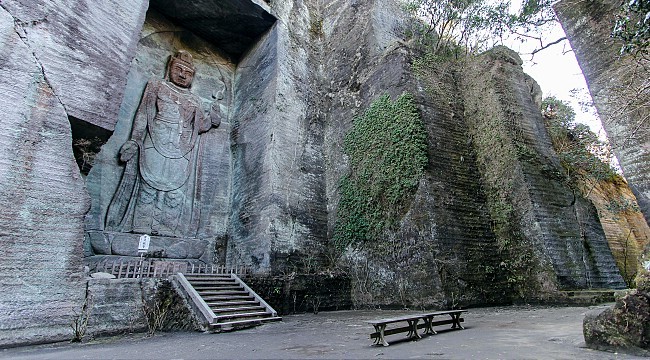
When I lived in Japan, I visited a place called Nokogiriyama home to a sprawling Nihon-ji temple complex. There are a number of reliefs carved into the side of the mountain which definitely are reminisce of Yamatai’s Queen Himiko’s statues. Game environments like these allow us to explore the past from more than just a player’s perspective. Interaction is a key to gaming, a medium that has allowed us to explore ancient environs. When it’s done successfully, a la Tomb Raider and Dragon Age, it can inspire gamers to seek the real truths, or spark their own creative imaginations.

6433_04.jpg
Nokogiriyama definitely had some real life Yamatai vibes. It is home to one of the biggest buddhas in Asia.

There are the plenty of other examples of the use of archaeological ruins and artefacts, but these two are my favorites. There is something very much ingrained into our psyche about archaeology and the mystery of what our ancestors left behind. When we interact with these environments in game it allows us to think of its functionality, its beauty and its past. In Trespasser when we go further and further into the evanuris to discover the truth of the plot, we discover a past that in fact is very much like our present. A world full of conspiracy, intrigue, betrayal but yet one full of beauty and humanity.